


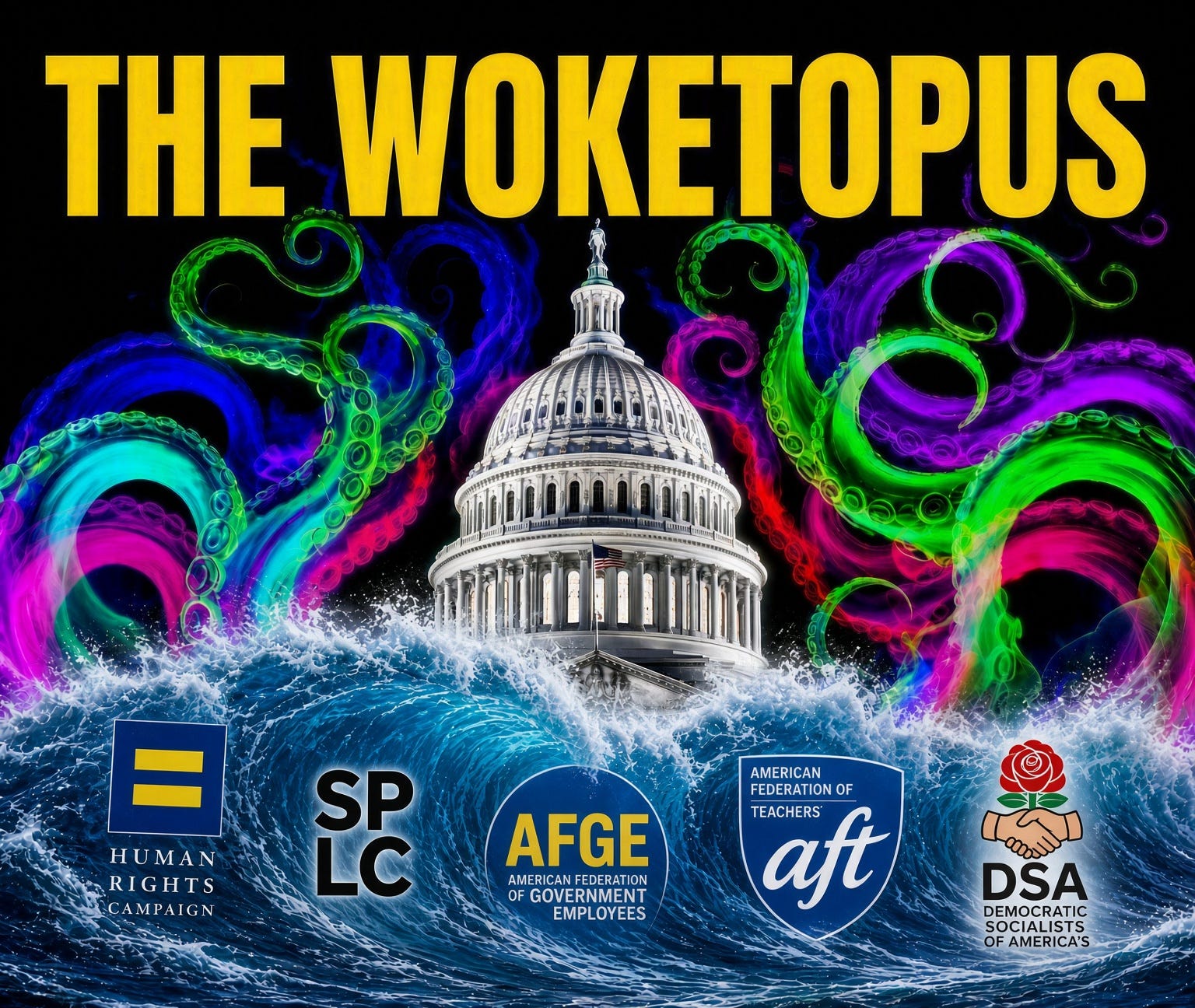
Left-wing activist groups helped Democrats win the 2026 midterms, and now they’ve come to collect.
Kelley Robinson, president of the Human Rights Campaign, put it this way: “LGBTQ+ voters delivered for pro-equality candidates, and now we expect them to deliver for us.”
“With a new Congress coming in, we are making clear that simply undoing the damage of the last two years is not enough,” she added.
HRC, the American Federation of Government Employees, the American Federation of Teachers, the Southern Poverty Law Center, and the Democratic Socialists of America supported Democrats in the midterms. Now, most are openly seeking to translate electoral success into policy.
These organizations represent different parts of the Left, but they often walk in lockstep and seek to use electoral success to achieve different forms of overlapping influence—some more explicit than others.
Human Rights Campaign
HRC, America’s largest LGBTQ+ activist group, spent $15 million on races and voter turnout operations, mostly backing Democrats. It released an “agenda” for “full equality” last week.
The organization’s agenda calls on Congress to secure what it calls “five fundamental rights”: protection from discrimination, access to transgender procedures, schools that are “safe and free from discrimination,” the right to “build the families we want” by expanding fertility treatments, and the right to “live openly, free from harassment and violence.”
This represents a full-scale rejection of the Trump administration’s reforms, which champion biological sex over an amorphous “transgender identity.” Last year, the Department of Health and Human Services published a systematic review of the evidence on experimental transgender interventions on minors, and found “extremely weak evidence” they had any positive benefit—yet HRC is calling on Congress to wholeheartedly endorse these experiments on minors.
It isn’t surprising to see HRC advocate for this, but the group supported many Democrats in the election, and it’s now demanding policy wins in exchange. Interestingly, HRC supported many of the very Democrats who later distanced themselves from transgender ideology on the campaign trail, such as James Talarico.
Union Power
The American Federation of Government Employees has also called on the new Congress to advance its priorities, after dozens of Democrats endorsed by AFGE won their elections. (AFGE also endorsed at least one Republican.)
“AFGE members voted for their interests and helped elect pro-worker majorities to lead the U.S. House and U.S. Senate,” AFGE President Everett Kelley said. He interpreted the election as a referendum on the Department of Government Efficiency, and called on Congress to pull up “DOGE corruption by its roots.”
He urged Congress to overturn President Trump’s 2025 executive order “that illegally eliminated collective bargaining rights for more than a million federal employees.” AFGE has sued Trump to block the executive order, which determined that certain agencies were too vital to national security for collective bargaining. The case is still pending after an appeals court vacated an injunction blocking Trump’s order.
He also called on Congress to give federal workers a 3.8% pay raise to match the raise for civilian law enforcement officers and military service members.
These moves would bolster federal workers and undermine Trump’s efforts to reform the bureaucracy.
Teachers Unions
The American Federation of Teachers boasted an election program spanning 31 states and a get-out-the-vote effort with an AFTvotes bus traveling to 19 states and Washington, D.C., in 21 days. AFT claimed its 1.875 million members rallied and organized, helping bring the union vote to 15% of the overall electorate.
AFT President Randi Weingarten called on the next Congress to “fix the damage Donald Trump and his cronies have wrought” and to “build a better life for everyday Americans.” She called for “strengthening public education and higher education, increasing wages, making health care affordable and accessible, and rebuilding our democracy.”
This emphasis on the labor movement echoed AFGE, and Weingarten also framed the election as a defeat for school choice.
She claimed that candidates “who supported public schools and rejected private school vouchers triumphed.”
This preference isn’t just ideological. Public schools are far more heavily unionized than private schools, so policies steering students toward the public system also protect the institutional terrain on which AFT exercises its power.
SPLC
Unlike the others, the Southern Poverty Law Center did not immediately connect election victories with directional policy demands. The SPLC’s Action Fund celebrated the victories of more than 40 candidates it endorsed across the South, but did not call on Congress to take concrete action. Many of SPLC Action’s candidates did not overlap with the other groups, but Shomari Figures enjoyed endorsements from SPLC Action, HRC, and AFGE.
The SPLC faces a federal prosecution under Trump, after years of close ties to the Justice Department under President Joe Biden. Federal prosecutors once took tips from the SPLC, but now the FBI has formally sworn off using it, calling the group a “partisan smear factory.”
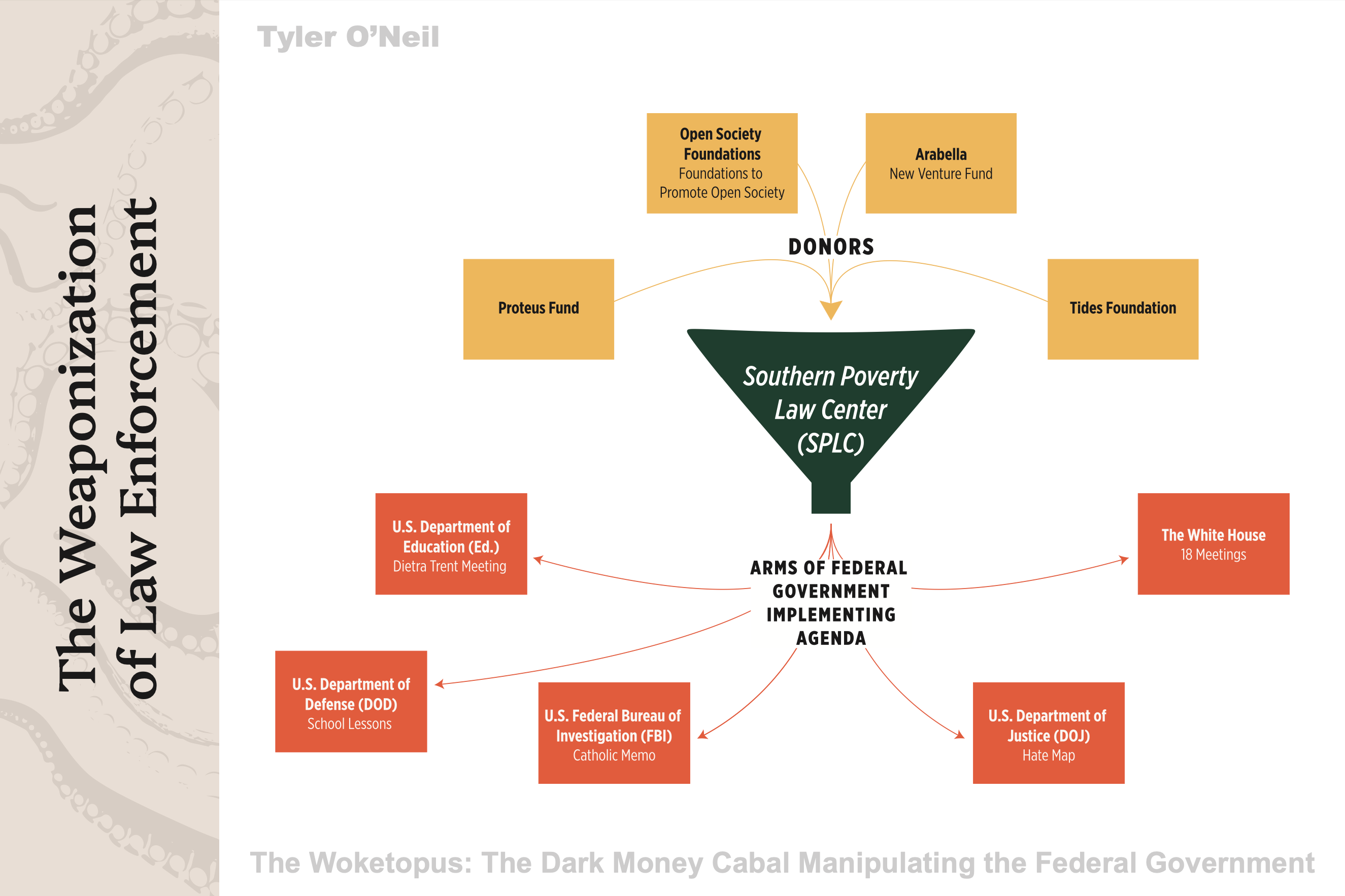
The new Congress may offer opportunities for the SPLC. Democrats may invite SPLC staff to testify at congressional hearings, cites its “hate map,” defend the organization againt executive scrutiny, or pressure agencies that have sworn off the SPLC to reconsider their stance.
FROM MY DESK
📚Reading: The One-Year Chronological Bible
I am currently in the book of Romans, as I come close to the end of the year in the one-year chronological Bible. This Bible arranges the epistles in chronological order, so as you’re reading through Acts, you get to the place where Paul wrote one of his letters. It’s a great way to understand not just what the Bible says, but when in history each book was written.
📰Worth your time: Rob Bluey predicts the future of journalism.
🦷Chewing: Underbrush Remineralizing Gum.
Do you ever see those ads for gum that supposedly helps your teeth rebuild themselves? Well, most of the ads are for brands that are more expensive and less proven than Underbrush. Now, let me be clear—this gum isn’t a replacement for brushing your teeth. But I do think the minerals may help, and I enjoy chewing it.
DSA
The DSA has taken the strategy one step further: not just pressuring candidates it helped elect, but attempting to launch a presidential campaign.
The DSA counted 176 wins on Election Day, including a slate of new members in the House of Representatives, such as Reps. Darlializa Avila Chevalier and Melat Kiros.
These candidates met with House Minority Leader Hakeem Jeffries, D-N.Y., demanding concessions on Medicare for All, restricting Immigration and Customs Enforcement, and moving against Israel. Seven of the incoming members (not all of whom were endorsed by the DSA) released a joint statement noting that they did not vote for Jeffries to become House Speaker in January, but that they “have seen meaningful progress” in negotiating with him.
The DSA released a statement in solidarity with Chevalier and the others who voted against Jeffries.
“On November 3rd, voters demanded a different kind of politics,” the DSA stated. “They demanded bold steps towards medicare for all, abolishing ICE, and an end to Israel’s genocide in Gaza.”
“No more corporate coronations,” the party added. “Democrats who enable genocide, ICE, and billionaire interests must be ousted.”
Meanwhile, multiple DSA chapters have called for Rep. Alexandria Ocasio-Cortez, D-N.Y., to run for president. Eric Blanc, a member of the Bread & Roses Caucus within the DSA, wrote that the “draft AOC” campaign isn’t just about AOC, but also an “opportunity to strengthen socialist organizing well beyond Washington.”
The DSA may not have figured out the most effective strategy for influence—Jeffries still won the speaker vote—but these moves suggest we’re only at the beginning of its organizing push.
That’s also the case for the Left more broadly. Elections aren’t the end goal for these groups—they’re a means to an end.
HRC wants Congress to advance its transgender agenda. AFGE wants lawmakers to restore union power in the federal bureaucracy. AFT wants to bolster the public-school system where its members wield influence. The SPLC has an opportunity to rebuild the kind of institutional access it enjoyed under Biden. The DSA may be the most ambitious of all, aiming for a presidential candidate so early in the 2028 cycle.
The midterms decided who holds power in Washington. The next two years will reveal which outside organizations prove most successful at wielding it.
Disclosure: This newsletter may contain affiliate links. If you purchase through these links, I may earn a commission at no additional cost to you.